Hotel hospitality
Hotel marketing: how can an independent hotel become better known?
A practical plan for hotels and inns: positioning, Google, website, distribution, content and reliable guest information during a stay.
Choose a promise the property can deliver
A hotel is not the best answer to every trip. List actual reasons for visiting: business, weekends, walking, family or events. Which are particularly well supported by your location, rooms and services?
Read the details
Describe that concretely. “An inn near the walking trails with an early breakfast” helps more than a generic claim about unique authenticity. Promise an early breakfast only if you can serve it.
Pictures, practical details and the booking journey should match. If guests discover an important restriction only on arrival, communication may be creating the wrong expectations.
Keep discovery points consistent
List Google, your website, booking platforms, tourist office, social profiles and genuinely useful directories. Compare names, address, contacts, photographs, services and conditions. Renovations or a restaurant closure should be reflected wherever they affect the decision to book.
| Channel | Traveller’s question | Priority information |
|---|---|---|
| Google and maps | Does the location and property suit me? | Place, photos, accurate details |
| Hotel website | Which room and conditions? | Offer, access and clear booking |
| Booking platform | Can I book these dates? | Availability and consistent terms |
| Tourist office | What can I do in the area? | Local strengths and contacts |
| Social media | What is the property like today? | Current images and useful updates |
Read the details
Assign an owner for maintenance. Otherwise a new website can coexist for months with an old, contradictory profile.
Make the website help a decision
Travellers should understand rooms, location, access and services, then find booking or contact options. Test the journey on a phone. Hidden conditions or images of the wrong room category create uncertainty.
Read the details
Answer common pre-booking questions: parking, late arrival, pets, accessibility, breakfast and dining. Describe actual conditions instead of adding adjectives. Say when availability needs confirmation.
A separate page can help with a real need, such as arrival by train. Avoid nearly identical pages for every neighbouring town. Each should contain information the property knows and can maintain.
Compare distribution with consistent figures
Direct bookings and platforms can complement each other. Compare costs, cancellations, administration and stay types. Gross booking value alone is insufficient.
Read the details
HotellerieSuisse studies hotel distribution. Use sector context to ask useful questions, then decide from your own property’s figures rather than applying national averages mechanically.
In a monthly review, distinguish enquiries, confirmed bookings and completed stays. Mark unknown origin honestly. Someone may discover you on a platform and call directly; do not claim attribution precision you cannot measure.
Support the stay with a digital guest guide
Create my preview →Publish content that prepares the stay
Choose subjects your team knows: getting from the station, a day nearby, an early departure or a house service. Check recommended venues’ hours and conditions before publishing.
Read the details
A realistic calendar can follow the seasons: spring access, summer terrace, autumn events, winter travel. Set review dates for details that change. Useful content needs care after publication.
Photographs should show current rooms and services. Translations must preserve recognisable place names and explain local arrangements. An unclear arrival page can undo the work of attracting guests in another language.
Deliver the promise at reception
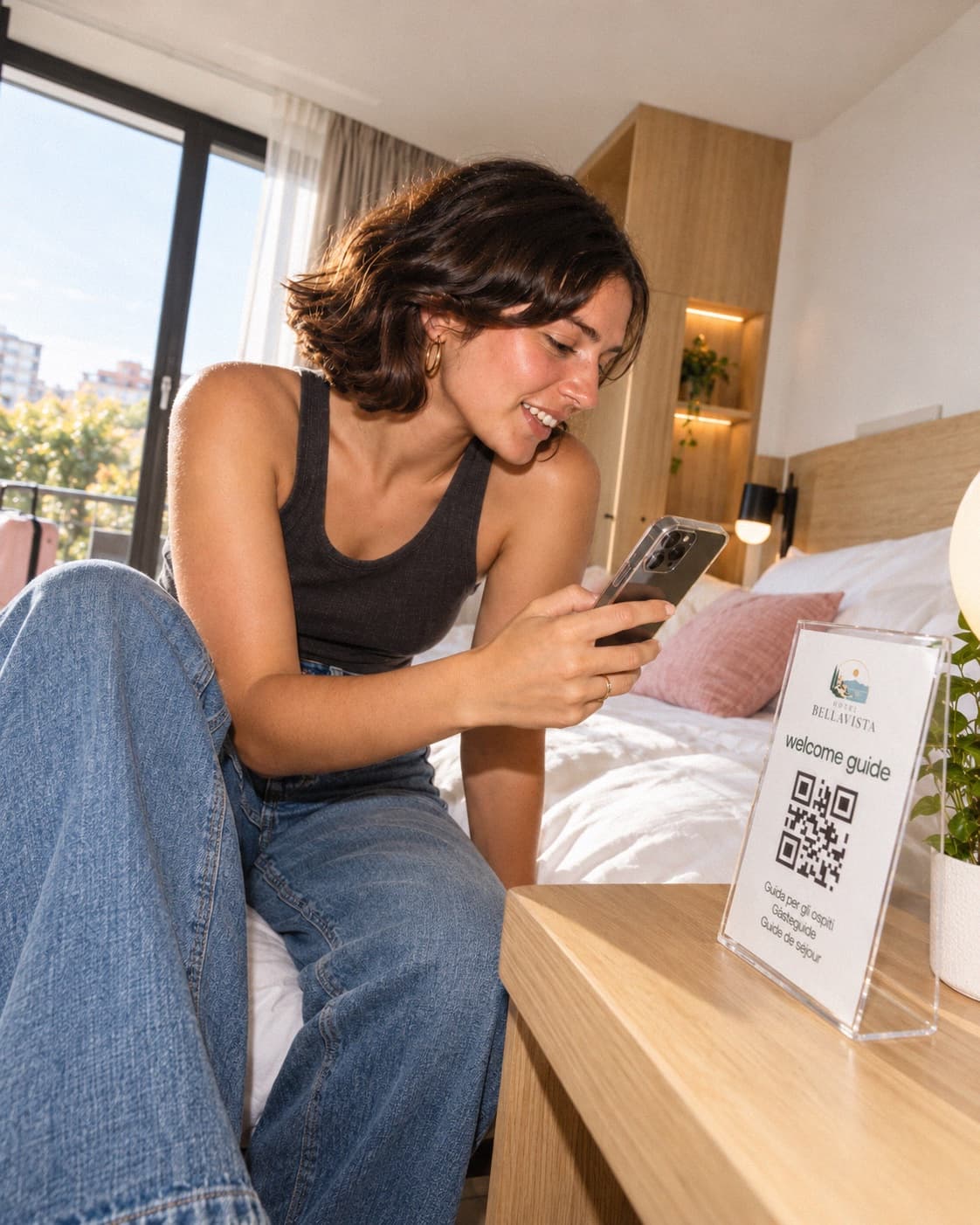
On arrival, Wi-Fi, breakfast, services, dining, departure and contacts should be easy to find. A digital guide can collect those answers in the available languages.
Read the details
Swizee Stay is included in Expérience and opens through a QR code. It replaces neither your booking engine, PMS nor reception team. It can explain services and open the property’s published menus.
For the next thirty days, choose three actions: correct contradictory information, improve one booking step and publish one useful piece of content. Then review questions, enquiries and stays. This is easier to manage than changing every channel simultaneously without a measurable objective.
Questions about this topic
Can a guest guide alone attract new customers?
No. It helps during the stay. Discovery and booking also require work on acquisition channels.
Must we use every social network?
No. Prioritise channels used by your guests that your team can maintain properly.